Showing posts with label Safer Sex. Show all posts

Sunday, June 12, 2011

Bug Chasers in Jamaica


Bugchasing is a slang term for the practice of pursuing sexual intercourse with HIV infected individuals in order to contract HIV. Individuals engaged in this activity are referred to as Bugchasers. Bugchasers may seek HIV infection for a variety of reasons.
Bugchasers seek sexual partners who are HIV positive for the purpose of having unprotected sex and becoming HIV positive; giftgivers are HIV positive individuals who comply with the bugchaser's efforts to become infected with HIV.

Bugchasers indicate various reasons for this activity. Some bugchasers engage in the activity for the excitement inherent in pursuing such a dangerous activity, but do not implicitly desire to contract HIV. Some researchers suggest that the behavior may stem from a "resistance to dominant heterosexual norms and mores" due to a defensive response by gay men to repudiate stigmatization and rejection by society.
Some people consider bugchasing "intensely erotic" and the act of being infected as the "ultimate taboo, the most extreme sex act left." A number of people who are HIV negative and in a relationship with someone who is HIV positive seek infection as a way to remain in the relationship, particularly when the HIV positive partner may wish to break up to avoid infecting the HIV negative partner.

Some workers in the US HIV community report that a number of younger people seek infection as a way to receive benefits, a "free ride," because they would qualify to receive Section 8, Social Security and other benefits from getting infected with HIV.Some contend that this behaviour stems from feelings of inevitability towards HIV among the gay community and the empowerment of choosing when to contract the virus.

Others have suggested that some people who feel lonely desire the nurturing community that supports persons with AIDS.
By design, bug chasing involves bareback sex, but members of the bareback subculture are not necessarily bugchasers. The difference is intent:

“In reviewing the scarce unpublished and published materials on bugchasing, as well as general healthcare speculations, a common theme appears- the lumping of bug chasers with barebackers...Although these two groups share some of the same practices, namely unprotected anal intercourse (UAI), there are distinctions that differentiate bug chasing...even though all bug chasers are indeed barebackers, not all barebackers are bugchasers.

Imagine my shock in here in Jamaica where we are more conservative to a point terms of sexuality even in same gender loving terms to hear or see someone express only they wish to be penetrated by a HIV+ man bare backed with sperm left in his rectum, this is the face of persistent social marketing both from the national level through the ministry of health and other private institutions and non governmental agencies.
The young man in a recent online group chat and subsequent one on one exchange was clear in his desire. He said he likes bareback sex and wished he could be in an orgy typed scenario with several HIV+ but healthy looking men as he feels he can survive the infection non the less, this is even after my trying to explain that there are different strains of HIV and that getting multiple infections can lead to a faster deterioration in health.

According to Wikipedia in the media there have been some references to this practice:
HIV positive man Ricky Dyer, who investigated the apparent bug chasing phenomenon for a 2006 BBC programme, I love being HIV+, said that an air of complacency about the realities of living with the virus may be one reason why infection rates have been rising.[18] However, the BBC also described bugchasing as more internet fantasy than reality, saying that, "Dyer finds that the overwhelming majority of the talk is pure fantasy." The article also quotes Will Nutland, head of health promotion at Terrence Higgins Trust, as saying, "The concepts of 'gift giving' and 'bug chasers' are definitely based more in fantasy than reality" as well as Deborah Jack, chief executive of the National AIDS Trust saying, "There is very little evidence of people trying to get infected with HIV."

In the Showtime series Queer as Folk a former student of Professor Ben Bruckner, asked Ben to infect him with HIV, wanting to experience "the gift." Ben refuses and writes a novel about the incident.
In the NBC series ER, season 7 episode 13 Dr Malucci treats a gay man who wants to contract HIV from his positive partner. Malucci asked they HIV- patient if he is 'bug chasing'

A character named Billy in a book by Dakota Chase called Changing Jamie is a bug chaser and attends a bug party in order to get "the gift" believing the man he has fallen in love with will accept him. He does test positive later in the novel, only to discover at the end of the book what a mistake it was.

This behaviour has been associated with some in the Caucasian bear MSM communities usually or even in some hobosexual groups as well now we see the tastes showing up here, maybe due to the fact HIV positive persons can now live almost ill free from opportunistic infections creating havoc running alongside HIV and decreasing one immune system.


Safer sex is still key but how do we meet this issue when it presents itself when would be participants insist on deriving "the gift" while enjoying themselves and thinking they are alright?

More is obviously needed to arrive at some workable solutions.

Peace and tolerance

H

Monday, February 28, 2011

Tenofovir Gel Provides High Level of Protection Against HIV in Rectal Tissue

via Microbicide Trials Network

[The abstract, RMP-02/MTN-006: A Phase I Placebo Controlled Trial of Rectally Applied 1% Vaginal Tenofovir Gel with Comparison to Oral Tenofovir Disoproxil Fumarate, is being presented at a scientific session at CROI 2011


Strongest effect seen in tissue taken from participants after one week of use

BOSTON, Feb. 28, 2011 – A gel developed to protect against HIV during vaginal sex produced a strong antiviral effect when used in the rectum, according to an early-phase study presented today at the 18th Conference on Retroviruses and Opportunistic Infections (CROI). The results, based on rectal tissue biopsies sampled from HIV-negative men and women who used the product daily for one week, provide the first-ever evidence that tenofovir gel could help reduce the risk of HIV from anal sex, even though the vaginal gel formulation may not be optimal for rectal use.

Tenofovir gel was not especially well-liked by a majority of men and women in the study, yet most reported they would be likely to use the gel if it became available in the future as a method for preventing HIV. Although the study found use of the gel generally safe, side effects were problematic to a few study participants. In hopes of making tenofovir gel more acceptable for rectal use, researchers have since modified the gel and are now testing it in another study.

“We are very encouraged about these findings that indicate applying tenofovir gel topically to the rectum could be a promising approach to HIV prevention,” said Peter Anton, M.D., professor of medicine and director of the Center for Prevention Research at the University of California, Los Angeles (UCLA), who led the study with Ian McGowan, M.D., Ph.D., co-principal investigator of the Microbicide Trials Network (MTN) and professor of medicine at the University of Pittsburgh.

“These are early results, but help set the stage for current and future trials of rectal microbicides and the development of a rectal-specific formulation of tenofovir gel,” added Dr. McGowan, who is leading the second study of the new gel formulation.

Microbicides, products applied on the inside of the rectum or vagina, are being designed and tested to help prevent or reduce the sexual transmission of HIV or other sexually transmitted infections. The majority of microbicide research thus far has focused on products to prevent HIV during vaginal sex. Yet, the risk of becoming infected with HIV from unprotected anal sex may be at least 20 times greater than unprotected vaginal sex, in part because the rectal lining is only one-cell thick compared to the vagina’s multiple layers, making it easier for the virus to reach cells to infect.

The study, known as RMP-02/MTN-006, is the first clinical trial of tenofovir gel for rectal use. Last year, tenofovir gel was shown in a trial called CAPRISA 004 to reduce the risk of HIV infection in women who used it before and after vaginal sex.

Conducted at UCLA and the University of Pittsburgh, RMP-02/MTN-006 tested two products – tenofovir gel and oral tenofovir – in 18 sexually abstinent, HIV-negative men and women. Oral tenofovir, an antiretroviral (ARV) tablet commonly used to treat people with HIV in combination with other ARVs, is being explored as a means to prevent infection in people who are HIV-negative through an approach called pre-exposure prophylaxis, or PrEP.

The trial directly compared the anti-HIV activity of a single dose of oral tenofovir to a single dose of rectally-applied tenofovir gel. This was followed by six days of at-home dosing of tenofovir gel or a placebo gel, with the last and seventh dose given in the clinic. A novel approach was used to determine whether any actual protection was provided by the drug given in the different regimens – single oral, single gel and seven-day gel (or placebo) – in which small biopsies were taken from the rectal lining of the participants using a standard clinical procedure called sigmoidoscopy. The tissue samples were then sent directly to the laboratory where they were exposed to HIV to determine how well study products protected the tissue from infection.

The researchers found that HIV was significantly inhibited in tissue samples from participants who used tenofovir gel daily for one week compared to tissue from participants who used the placebo gel. While a slight anti-viral effect was noted in tissue from participants who received a single dose of tenofovir gel, the finding was not statistically significant. The single dose of oral tenofovir did not provide any protection against HIV in rectal tissue samples.

“These kinds of efforts early in the development phase of rectal microbicides can give us insight into a particular product’s potential efficacy, which enables us to better design and hasten the pace of future clinical trials,” said Dr. Anton.

According to self-reports, only 25 percent of men and women who had used the tenofovir gel said they liked it. However, when asked whether they would consider using the product in the future, 75 percent of these participants reported a high likelihood of future use. Two of the 12 participants who received tenofovir gel reported severe gastrointestinal side effects, including diarrhea and lower abdominal cramps.

“These results tell us that tenofovir gel was relatively safe to use in the rectum for most participants, but we need to address side effects to make it more acceptable to use,” said Dr. Anton, who reported the findings at CROI. “Even though three-quarters of the participants reported they didn’t like the gel, we are very encouraged that the majority would consider using such a product in the future.”

Another study, MTN-007, now underway is using a formulation of tenofovir gel with less glycerin, a common additive found in many gel-like products, in the hope that this will make it better tolerated when used in the rectum. Laboratory tests of the reformulated gel suggest it is just as effective as the original formulation but less irritating to the epithelium – the layer of cells that serves as a protective barrier inside the rectum. The study began in October 2010 and is enrolling 60 men and women at three sites – University of Pittsburgh, University of Alabama at Birmingham and Fenway Health in Boston.

In addition to Drs. Anton and McGowan, other authors of RMP-02/MTN-006 are Ross Cranston, M.D., University of Pittsburgh; Alex Carballo-Dieguez, Ph.D., Columbia University; Angela Kashuba, PharmD, University of North Carolina; Elena Khanukhova, UCLA; Julie Elliott, UCLA; Laura Janocko, Ph.D., MTN and Magee-Womens Research Institute; William Cumberland, Ph.D., UCLA; and Christine Mauck, M.D., M.P.H., CONRAD.

RMP-02/MTN-006 was a collaboration between the Microbicide Development Program at UCLA and the MTN. UCLA’s Microbicide Development Program is funded by the Division of AIDS Integrated Preclinical/Clinical Program for HIV Topical Microbicides at the National Institute of Allergy and Infectious Diseases. The study products were developed by Gilead Sciences, Inc., of Foster City, Calif., which assigned the rights for tenofovir gel to the International Partnership for Microbicides of Silver Spring, Md., and CONRAD, of Arlington, Va., in December 2006. Gilead Sciences and CONRAD provided the study products free of charge.

# # #

Additional information about the study and rectal microbicides is available here.

The Microbicide Trials Network (MTN) is an HIV/AIDS clinical trials network established in 2006 by the National Institute of Allergy and Infectious Diseases with co-funding from the Eunice Kennedy Shriver National Institute of Child Health and Human Development and the National Institute of Mental Health, all components of the U.S. National Institutes of Health. Based at Magee-Womens Research Institute and the University of Pittsburgh, the MTN brings together international investigators and community and industry partners who are devoted to preventing or reducing the sexual transmission of HIV through the development and evaluation of products applied topically to mucosal surfaces or administered orally.

Wednesday, February 16, 2011

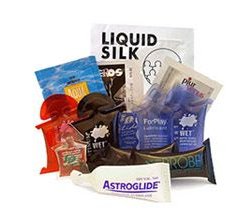
Lube Alert Fellas for that tight ass .... certain lubes may aid in damaging anal tissues says new study

by David Evans

A forthcoming research report suggests a number of personal lubricants can damage anal tissue cells and increase HIV replication, potentially heightening the risk of contracting HIV, notably if condoms aren’t used.

The “personal lubricant” market is a thriving one. One popular website sells 53 different brands, with many boasting several varieties. If you’d like one that tastes like fruit or chocolate, or adds the sensation of heat, you’ve got multiple options to choose from. The same goes for the degree of slipperiness, the type of sex you want to have, the ease of cleanup and, most important, condom compatibility.

LubesWhat sexual accoutrement retailers can’t tell you is whether a lube will increase, decrease or have no effect on your chance of becoming infected with HIV if the condom breaks or you decide not to use a condom in the first place. Until recently, it wasn’t a question high on the list of researchers’ or manufacturers’ priorities—lubes are intended to keep condoms from tearing during sex, end of story. But for scientists at thePopulation Council, a New York City–based research organization at the forefront of HIV microbicide development efforts, the positive or negative effects of lubricants on HIV transmission has been a nagging issue for years.

New research results from the nonprofit organization suggest there may be reasons for concern. According to laboratory studies the group conducted—on schedule to be published in a forthcoming issue of AIDS Research and Human Retroviruses and currently available online—a large number of popular lubes may actually make it easier for HIV to get past the body’s defenses, notably during anal sex without a condom. Even more alarming is the finding that four lubes in particular cause HIV to reproduce up to four times faster than it does in the absence of such products.

The researchers caution that the test tube study results are extremely preliminary and merely suggest a potential problem with several personal lubricants. Further studies, they say, are needed to determine the “real world” implications of these findings, including whether or not these products do in fact increase the risk of HIV transmission. One thing this study makes abundantly clear, however, is that we know very little about one of the main ingredients in the safer-sex recipe.

Lube 101

When it comes to anal sex, lubricants are a condom’s best friend, as they help reduce friction and the risk of tears during intercourse. But what about the benefits of lube alone, in the event the condom breaks or a rubber is left out of the equation altogether? In these situations, experts have reckoned, the use of a slippery substance is likely better than nothing.

Sex without lubrication can damage the epithelium—the thin membrane of mucosal cells lining the rectum and anus (as well as the mouth, nose and vagina) that keep the vast majority of unfriendly bacteria, fungi and viruses out of our bodies. So the thinking goes: The wetter the better.

If this tissue is damaged—because of physical tears, chafing, infection or inflammation from irritating substances—the epithelial cells and the chemical bonds that hold them together can fray, causing the protective system to break down. That’s where things can also go wrong with sexual lubricants. Several recent studies suggest that instead of protecting epithelial cells, lubes may actually compromising the integrity of the cells.

Enter Othell Begay and José Fernandez-Romero, PhD, from the HIV/AIDS Division of the Population Council. Begay, Fernandez-Romero and their colleagues, who are particularly interested in developing microbicide gels capable of blocking sexual transmission of HIV, were intrigued by a set of recent reports documenting problems with some of the most commonly available lubricants.

In one study, researchers partnered with the International Rectal Microbicides Advocates (IRMA) to select six of the most popular lubricants used by men and women who practice anal sex. In the process, they tested how these lubes affected epithelial cells as well as the necessary bacteria that help keep the gut and rectum healthy.

That study found that several of the lubes contain more sugar and salt than is typically found inside cells of the anus or vagina. The imbalance causes the epithelial cells to purge their water content and, as a result, become withered and die—a condition called hyperosmolarity.

The study also found that one of the lubes completely wiped out the population of beneficial bacteria in the rectum, a situation that can allow unfriendly organisms—including HIV—to flourish.

A second study looked specifically at the incidence of gonorrhea and chlamydia in people who used lube for anal sex versus those who didn’t use lube, either with or without a condom. The study found that rates of these two sexually transmitted infections (STIs) were twice as high in those who used lube compared with those who didn’t, again suggesting that lubes were causing the rectum to become vulnerable to infection.

HIV: Another Possible Risk

To explore the matter further, Begay and Fernandez-Romero’s team purchased 41 over-the-counter lubricants and pitted them against two substances with known effects on both HIV and epithelial cells. Those two substances were Carraguard, which does not harm epithelial cells and is being studied as an HIV-blocking microbicide, and Gynol II, which contains nonoxynol-9, a substance known to harm epithelial cells and increase the risk of HIV infection. They then posed the same two questions about each of the 41 lubricants: Was the lubricant potentially toxic to cells, and did the lubricant inhibit or accelerate HIV replication?

As to the first question, the researchers found that all of the lubes, compared with Carraguard, damaged epithelial cells in test-tube tissue samples.

The team was also able to test the osmolality of 32 of the 41 candidates—in other words, to what degree the salt and sugar concentrations of the lubes could cause the cells to purge or retain water. Only one of the lubricants, Probe Personal, had a neutral osmolality, similar to Carraguard. All of the others were either hyperosmolar, similar to the IRMA study findings, or hypoosmolar—capable of causing cells to swell up with water, which can cause them to burst.

More striking and surprising was the answer to the team’s second question. While none of the lubricants had HIV-inhibiting qualities that approached that of Carraguard, four Astroglide brand lubricants actually appeared to increase HIV replication in cell cultures by as much as four times, compared with cultures not exposed to lubricants. These results stood in contrast to a previous study documenting anti-HIV activity of Astroglide lubes, and the team sought an explanation.

The Population Council research team analyzed the ingredients of the lubes and found that the four lubes in question—Astroglide Liquid, Astroglide Warming Liguid, Astroglide Glycerin & Paraben Free Liquid and Astroglide Silken Secret—all shared a common ingredient that was not present in the other Astroglide formulations: Polyquaterniums, a class of chemicals commonly found in cosmetic products. Polyquaternium-15, in particular, was in three of the four Astroglide formulations.

Though the specific formulation of polyquaternium-15 is not commercially available, the team tested a very similar chemical (MADQUAT). It too resulted in increases in HIV replication, leading the researchers to suspect that polyquaternium-15 might be the cause.

How is it that we’re only coming upon this potentially important safety information now? “Lubricants are classified by the U.S. Food and Drug Administration as a cosmetic, rather than as a medical device,” Begay explains. Most people would probably assume that because they can buy lubricants in stores then the products must be safe and don’t need further testing, including toxicity testing. Not so. Begay says: "After doing microbicide research and getting all of this knowledge on microbicides and how delicate these epithelial cells are, we discovered that lubricants should be tested.”

Fernandez-Romero adds: “The FDA requires that lubricant manufacturers tests lubricants for vaginal irritation. They might consider adding a similar requirement to assess product safety for rectal use.”

To Lube or Not to Lube?

The Population Council’s results are preliminary, and Fernandez-Romero stresses it remains unclear whether any lubricant might increase the risk of HIV transmission. “The bottom line,” he says, “is that more research is needed.”

What the paper implies is that not all lubes act the same in cells and tissues in the anus, which could be an issue with respect to HIV transmission. “I think our paper is good,” adds Fernandez-Romero, “because it is saying, ‘There could be a problem here. We have to investigate more.’”

The results also don’t change the fact that the lubes are well tested for their compatibility with condoms, and it is the condom, much more than the lube, that offers the best protection against HIV transmission. “Ultimately, the use of condoms is the best way to prevent transmission, but using a lubricant will prevent condom breakage,” Fernandez-Romero explains. “Lubricants may be important, but they have to be safe. We need assays, models or methods to tell us how safe a lubricant is.”

That said, the results do mean that assessing risk may have gotten more complicated for people who forgo condoms for one reason or another, which includes significant proportions of the population—young and old, gay and straight, male and female.

Fernandez-Romero says his team continues to collaborate with other groups that remain engaged in the study of lubricants and the potential heightened risk of HIV transmission. “We have been participating in conference calls and discussion on the topic with IRMA, but we currently don’t have any funding to look at lubricant safety.” He points out that other researchers, including Charlene Dezzutti, PhD, at the University of Pittsburgh, and Pamina Gorbach, Dr.PH, at the University of California at Los Angeles, “are doing some good work and really trying to find answers.

“More research needs to be done,” concludes Fernandez-Romero, “and we need to find the safest lubricants.”

To read more on the safety of personal lubricants for rectal use, click here to read IRMA’s Q&A for HIV educators and advocates

Should doctors disclose HIV status of patients to partners? discussed at Medical Ethics conference

"I believe that she has a right to know, because it is her life that is at stake," says one practitioner

(discussion was based on heterosexual sex)


MEDICAL doctors were Sunday divided when asked if they should be allowed to disclose the HIV/AIDS status of patients to partners who they were knowingly putting at risk.
The issue was raised by senior consultant in anesthesia at the University Hospital of the West Indies, Mona, and chairman of the Medical Association of Jamaica Ethics Committee Dr Allan Barnett at an Ethics Conference put on by the Jamaica Medical Doctors Association (JMDA) at the Mona Visitor's Lodge. The doctor presented a hypothetical situation involving a patient by the name of John who was HIV positive. Although John was found to be HIV positive, he refused to tell his pregnant partner Sue of his status and asked the doctor not to do so.

Vice-president of the Jamaica Medical Doctors Association, Dr Kenneth Appiah (left) greets president of the Jamaica Hotel and Tourist Association, Wayne Cummings during Sunday’s ethics conference at the University of the West Indies Mona Visitors’ Lodge, while chairman of the Medical Association of Jamaica Ethics Committee, Dr Allan Barnett looks on. (Photo: Bryan Cummings)

Read more: http://www.jamaicaobserver.com/news/Should-doctors-disclose-HIV-status-of-patients-to-partners-_8367124#ixzz1E7LwHVrF


When asked what should be done in this situation, some amongst the large gathering of medical practitioners felt that the doctor in this situation should be allowed to inform the pregnant woman and John's general practitioner about his status, while others disagreed.


Doctors are at present bound by law to keep their patient's information confidential but are expected to report new cases of HIV to the Ministry of Health, which is then expected to activate John's tracing pattern and at some point inform Sue.
But Dr Barnett took issue with this. "The way things work in Jamaica, that is not likely to happen before she gets her baby delivered," he said.
Under the Medical Act of Jamaica, a registered medical practitioner would be deemed guilty of conduct that is disgraceful in a professional respect if he breaches a patient's confidence, but Dr Barnett believes that the disclosure of a patient's HIV/AIDS status to their partner should be an exception to this rule.


"In other jurisdictions such as the UK, there is legislation which permits disclosure in the public interest and ethically and legally Sue must be informed," he said. "What we are supposed to do under those jurisdictions is explain to the patient that 'look I am sorry, I understand your concern, but your partner is at risk and the baby is at risk and you need to tell them and if you are not going to tell them I will tell them, so you have three days in which to do that, after which I am going to come and speak to her and let her know'," he said.


Dr Barnett's call for a change in the law comes amidst concerns raised by the health ministry last week that HIV/AIDS cases in Jamaica were increasing despite various efforts in the past few years to address the issue. In 1999, the number of reported cases stood at 1,436 in comparison to 1,738 in 2009.


"This situation is exacerbated by [a] high incidence of multiple partnerships and low condom usage. Persons continue to engage in risky behaviour and thereby risk their lives and those of their loved ones," Health Minister Rudyard Spencer said in a recent statement.


Despite increased access to anti-retroviral drugs, AIDS claimed the lives of 378 people in Jamaica in 2009. In an effort to increase awareness of the disease, the ministry launched Safer Sex Week last week under the theme "Protect your love, use a glove", which was expected to serve as an urgent reminder for persons to stick to one partner and use a condom whenever they are having sex.


"Men have an average of six sex partners, while women have an average of three...," the minister said in his statement, in reference to data presented in the 2008 Knowledge, Attitude, Behaviour, and Practice Survey.


Given the increase in HIV cases and the high levels of promiscuity, vice-president of the JMDA, Dr Kenneth Appiah also believes that the doctor in John's case should be allowed to inform Sue that he is positive and that her baby is at risk.
"I believe that she has a right to know, because it is her life that is at stake and also the life of her child and we should try as much as possible to find ways and means in being able to not break the confidentiality issue but at the same time be able to ensure that she is not at a disadvantage because of legal ramifications," he said. He added that it was a matter which his group would discuss further.


Monday, February 14, 2011

Female Condom (FEMIDOM 2) recommended for Gay Sex


Ringonit.org has launched a social media blitz on the use of the Female Condom also known as FEMIDOM for anal sex, this is not new in fact in the days of GLABCOM (Gay Lesbian Bisexual Community) meetings a Jamaica AIDS Support for Life and also through the Ministry of Health PLACE (Priority for Local AIDS Control Efforts) Program there was some targeting of MSM populations in adopting the Femidom for gay sex use. It did not take off as many had thought as the condom was thought to be too big and cumbersome and may take away from the pleasure of a tight ass. Many felt they were screwing a big balloon bag instead of getting a real good fuck. Any way here are some excerpts from their upcoming campaign along with a link to their video.

Female condoms (FCs) help prevent unintended pregnancy and sexually transmitted infections (STIs), including HIV. They are a great safer sex option that can be used by both women and men for vaginal and anal sex. In terms of effectiveness, female and male condoms are equally effective, when used consistently and correctly. FCs are unique because they are the only barrier method that can be initiated by the receptive partner, which helps women and men take control of their own health.

Just like male condoms, FCs are shaped like an open-ended tube. The main difference is that female condoms have two rings, instead of just one! There’s a removable inner ring and an attached outer ring. Theinner ring must be kept in during vaginal sex, but for anal sex, keeping it in is a matter of taste. The outer ring helps protect against STIs that are spread by skin-to-skin contact, like herpes, because it covers more surface area around the vaginal or anal opening, depending on what type of sex you’re having.

Another bonus is that the FC is made out of a synthetic rubber called nitrile, which is hypo-allergenic. This makes FCs a great option for people with latex allergies. Nitrile can also be used with any kind of lubricant. This is different from male latex condoms, which can only be used with water-based lubricant.

The picture on the left is of the first generation female condom (FC1) and the picture on the right is of the second generation female condom (FC2). The FC1 was approved by the Food and Drug Administration (FDA) in 1993. It is no longer in production, because in March 2009, the FDA approved the FC2, the new and improved edition!

There are different positions you can use to insert the FC. For example, you can squat, lie down, or support your body on your hands and knees.

Squeeze the inner ring between your thumb and middle finger.
Insert the inner ring into the anal opening, using your index finger to guide it.

Once the ring is part way in, put your finger inside the condom and gently push it into the anal cavity. The inner ring should be inserted past the sphincter; however some people chose to remove the inner ring once the condom has been inserted. It’s just a matter of taste.


Make sure the FC is not twisted and that the outer ring is outside of and covering the anal opening.

Another method for anal use is to remove the inner ring, put the FC over and erect penis or a dildo, and then enter the anus. As always, you should use a lot of lube and enter the anus slowly.

After the condom is inserted, more lubricant can be added to the inside of the condom and to your partner’s penis. When you and your partner are ready for insertion, hold the outer ring in place as you guide your partner’s penis into the FC.

To remove the condom, twist the outer ring to keep the semen inside, gently pull it out, and throw it away.

aCondom talk

Why condoms are important
Using condoms every time you have sex is the most effective way to protect yourself and your partner from sexually transmitted infections (STIs), including HIV, and unintended pregnancy. If you are sexually active, or think that you may become sexually active, be sure that you always have condoms on hand. Although talking about condoms can be uncomfortable, open communication is very important. It only takes one unprotected sexual encounter to contract HIV or another STI. Respect your body and your partner’s body and use a condom every time you have sex.

How to talk to your partner about using condoms
When you talk to your partner about condoms, you should be firm and make your expectations clear. If possible, have this discussion ahead of time, rather than in the heat of the moment. If your partner doesn’t want to use a male condom or is allergic to latex, you can suggest the female condom (FC). Check out our feel-good reasons to use FCs and share them with your partner. (Link to feel-good section.)

Sometimes one partner can pressure the other to have unprotected sex. Here are a few things that someone who does not want to use a condom might say, and some suggestions for how to respond.

Your partner says: Sex doesn’t feel as good when I’m using a condom.
You can say: If we use a condom, I’ll feel more comfortable, which will make the sex better for both of us. Plus, you’ll last longer if we use one.

Your partner says: I thought you trusted me.
You can say: It’s not a matter of trust. People can have STIs and not know.

Your partner says: I promise I’ll pull out.
You can say: Pulling out won’t protect either of us from STIs. Plus, condoms are much better at preventing pregnancy.

Your partner says: Condoms aren’t sexy.
You can say: I think that protecting each other’s bodies while we make love is much sexier than getting chlamydia or HIV.

Your partner says: But I love you.
You can say: Then you’ll help me protect myself.

Your partner says: But we’ve never used a condom before.
You can say: I’m not going to take any more risks.

Your partner says: No way.
You say: Then no sex.

See the demo video on YOUTUBE (embedding disabled so you have to go directly to view)

Monday, December 13, 2010

US study examines effect of water-based and silicon-based lubricant for vaginal & anal intercourse

BLOOMINGTON, Ind. -- A new study by sexual health researchers at Indiana University found that women who used lubricant during sex reported significantly higher levels of satisfaction and pleasure.

The study, involving 2,453 women, is the largest systematic study of this kind, despite the widespread commercial availability of lubricant and the gaps in knowledge concerning its role in alleviating pain or contributing to other health issues.

"In spite of the widespread availability of lubricants in stores and on the Internet, it is striking how little research addresses basic questions of how personal lubricants contribute to the sexual experience," said Debby Herbenick, associate director of the Center for Sexual Health Promotion. "These data clearly show that use of the lubricants in our study was associated with higher ratings of sexual pleasure and satisfaction and low rates of genital symptoms."

While these findings, reported in the November issue of the "Journal of Sexual Medicine," involve the use of water-based and silicone-based lubricant, researchers also found that study participants reported fewer genital symptoms -- and, in particular, fewer reports of genital pain -- when they used a water-based lubricant.

Michael Reece, director of the Center for Sexual Health Promotion and co-author of the study, said public health professionals have long recommended the use of lubricants as an important safer sex tool, particularly when used with latex condoms.

"These findings help us to reinforce to sexually active individuals that not only are lubricants important to safer sex but that they also contribute to the overall quality of one's sexual experiences," he said.

Here are some of the findings:

  • More than 70 percent of the time that lubricant was used for vaginal or anal intercourse, study participants indicated that they did so in order to make sex more pleasurable; more than 60 percent of women indicated this was the case during masturbation.
  • More than one third of the time that lubricant was used for vaginal sex, anal sex or masturbation, women indicated that they used lubricant because it was fun to do so.
  • Sizable proportions of women also indicated that they chose to use lubricant in order to reduce the risk of tearing, particularly for anal intercourse.

For the study, "Association of Lubricant Use with Women's Sexual Pleasure, Sexual Satisfaction, and Genital Symptoms: A Prospective Daily Diary Study," 2,453 women ages 18-68 participated in an Internet-based, double-blind assessment of the use of six lubricants during solo masturbation and partnered sexual activities. Women were randomly assigned to use one of six lubricants, four of which were water-based lubricants and two of which were silicone-based lubricants, during two weeks of a five-week study period.

Analyses of more than 10,000 acts of penile-vaginal intercourse, and more than 3,000 masturbation experiences, showed that participants' ratings of sexual pleasure and sexual satisfaction were significantly higher when a water-based lubricant or silicone-based lubricant was used compared to sex without a lubricant. Far fewer penile-anal intercourse events occurred; however, ratings of sexual pleasure and satisfaction were significantly higher when water-based lubricant was used during anal intercourse as compared to sex without a lubricant.

For all types of sex, genital symptoms were rarely reported and were generally less likely to occur when lubricant was used. More than half of the time that women used lubricant, they applied it to their own or their partner's genitals, or directly to their fingers and in about 10 percent of instances of vaginal intercourse, lubricant was applied directly to a sex toy.

"These findings demonstrate how lubricant can be used during foreplay or sex play with a partner, and incorporated into a couple's sexual experience," Herbenick said.

###

The water-based lubricants were, in alphabetical order, Astroglide® (Biolm, Inc.), Just Like Me® (Pure Romance), K-Y Liquid® (Johnson & Johnson) and Sweet Seduction® (Pure Romance). The silicone-based lubricants were Pure Pleasure® (Pure Romance) and Wet Platinum® (Trigg Laboratories).

In addition to Reece and Herbenick, co-authors include Devon Hensel, assistant professor, IU School of Medicine; Stephanie Sanders, The Kinsey Institute for Research in Sex, Gender, and Reproduction and the Department of Gender Studies at IU; Dennis Fortenberry, professor of pediatrics, IU School of Medicine; and Kristen Jozkowski, doctoral student at the Center for Sexual Health Promotion. Pure Romance, which also distributes three of the six lubricants used in the study, provided in-kind support for the study.

To speak with the researchers, contact Tracy James, IU Office of University Communications, at 812-855-0084 begin_of_the_skype_highlighting 812-855-0084 end_of_the_skype_highlighting and traljame@indiana.edu. To speak with a representative of Pure Romance, contact Genine Fallon at genine@pureromance.com.

http://www.eurekalert.org/pub_releases/2010-12/iu-see120310.php